To start with the most pressing question: are there legal online casinos Netherlands? The answer is YES.
The Remote Gambling Bill allowing online games of chance to be offeren on betting sites was adopted in the Netherlands in February 2019 after almost a decade of debate and division. The Remote Gambling Act (Kansspelen op Afstand, Koa) came into effect on April 1, 2021 — officially initiating the licence application process for interested operators.
After the Dutch gambling authority Kansspelautoriteit (Ksa) granted the first licences on the 29th of September 2021, the first regulated online casinos opened their virtual doors in the Netherlands on the 2nd of October 2021.
Make Sure To Read: Find out everything about the Dutch Gambling Law (source in Dutch)
Overview
- Dutch Gambling Authority
- Online Gambling regulations
- Regulation timeline
- Gambling in the Netherlands explained
- Frequently Asked Questions
Top online casino and betting sites Netherlands
Licenced Dutch gambling sites. Check out the best online casino Netherlands:
Welkomstbonus 100% tot 260 EUR + 26 gratis spins.

250 Gratis Spins voor Pirots 4 (t.w.v. €50!)

Welkomstbonus: Stort €25 of meer en ontvang tot 1500 gratis spins
Als je op een link klikt en aanmeldt, ontvangen wij een kleine vergoeding, maar er zullen geen kosten voor jou zijn. We raden alleen veilige, gelicentieerde en betrouwbare kansspelaanbieders aan.
Gambling in the Netherlands overview
Gambling is legal in the Netherlands under the Betting and Gambling Act 1964 which is a law that was made in the 60’s to regulate gambling. Being written in a time when the internet didn’t exist, the law was obviously outdated by the time the first online casinos emerged. Until the market officially opens up in October 2021, the Netherlands only has a regulated offline gambling market. This market currently consists of a number of gambling products:
- Land Based Casino Monopoly: Operated by the state-owned company Holland Casino, which manages 14 brick and mortar casinos across the country. Holland Casino is the only legitimate provider of table games in the Netherlands.
- Gaming Halls: The number of gaming halls in the Netherlands has fallen in recent years. Based on the latest Ksa market data, there were around 200 gaming halls in 2025. Only slot machines are permitted in these venues; table games are reserved for Holland Casino.
- State Lottery: Operated by de Staatsloterij, offering various lottery games to the public.
- Charity Lottery: Operated by organisations such as the Nationale Postcode Loterij and VriendenLoterij (part of the Postcode Lottery Group). These lotteries donate a significant share of their revenue, typically around 50%, to charitable causes. They are among the largest charity lottery operators in the world.
- Sports Betting: The market has transitioned from TOTO’s state monopoly until October 2021 to an open market. A separate sports betting licence is needed to offer this gambling product.
- Lotto: Operated by Nederlandse Loterij, Lotto offers weekly draws with substantial jackpots. A portion of the proceeds supports sports and charitable campaigns in the Netherlands.
- Horse Racing: The market has shifted from ZEturf’s state monopoly to an open market. Operators need a separate licence to offer this gambling product, which is distinct from the sports betting licence.
- Land-based Slot Machines: The number of slot machines in the Netherlands totals around 51,000 as of 2020. This includes approximately 14,000 in bars and restaurants and nearly 37,000 in casinos and speelhallen.
Types of Licences
There are four types of gambling licenses in the Netherlands:
- Casino Games against the House (e.g., blackjack, roulette, slot machine games)
- Casino Games against Other Players (e.g., poker, bingo)
- Sports Betting
- Horse Racing Betting
There is no cap on the number of online gambling licenses, so the number of license holders may change in the future. Applicants must meet strict requirements, and historically, only about one in three applicants successfully obtains a license.
Gross Gaming Result
The Dutch gambling market generated a total gross gaming result (GGR) of €4.3 billion in 2024, remaining stable compared to 2023 (source marketscan 2025 Ksa). This confirms that the regulated market has reached a more mature phase following the rapid growth after regulation in 2021.
Within this market, online casino games accounted for approximately €1.1 billion, representing around 26% of the total market. While the online segment remains significant, recent data suggests that growth has slowed due to stricter regulations and player protection measures.
In fact, early 2025 data shows that the online market experienced a decline of around 14% in gross gaming result compared to the previous period, largely driven by the introduction of mandatory deposit limits and responsible gambling policies in October 2024.
The slowdown in 2024–2025 highlights the direct impact of stricter Dutch gambling regulation on market performance.
Overall, the Dutch gambling market is now characterised by a more balanced structure, with casino games (56%), lotteries (34%), and sports betting (10%) forming the core segments of the regulated industry.
Market share online casino’s in the Netherlands
Based on the most recent publicly available operator data (2023), Unibet was estimated to hold around 20% market share, followed by Bet365 and BetCity (approximately 17%). Other key operators include TOTO Casino, Holland Casino Online, and Jack’s Casino.
| Market share online casinos in the Netherlands (2023) | ||
| 1 | Unibet | 20% |
| 2 | Bet365 | 17% |
| 3 | BetCity | 17% |
| 4 | TOTO Casino | 13% |
| 5 | Holland Casino | 8% |
| 6 | Jacks | 7% |
| 7 | Circus Casino | 3% |
| 8 | Kansino | 3% |
| 9 | 711 Casino | 3% |
| 10 | Livescore Bet | 2% |
| Other Brands | 7% | |
Make Sure To Read: Check out our complete lottery guide (source in Dutch).
Kansspelautoriteit (Ksa)
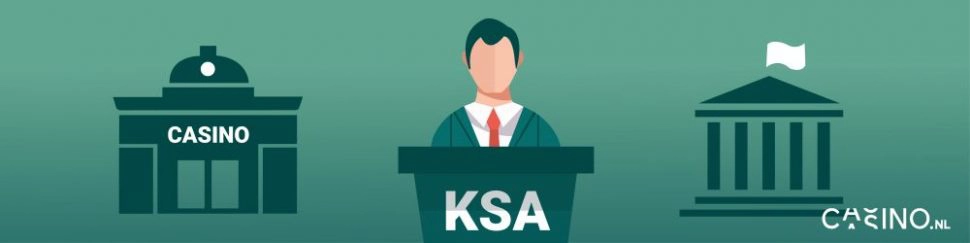
The Kansspelautoriteit is an independent governance body and the official regulator of all casino games in the Netherlands, both online and offline. The Kia was established on the 1st of April 2012 in city of The Hague. The Dutch gambling regulator was funded through gaming levies and the prevention of illegal gambling among Dutch players has been one of the main responsibilities ever since it was launched.
Prior to the establishment of the Ksa, the gambling market was overseen by the Supervisory Board for Games of Chance, which was founded in 1996. The former Supervisory board focused on gambling as a whole, rather than on internet gambling. The latter has become one of the main tasks of the KSA after online casinos started gaining popularity. Ksa’s key responsibilities include:
- Protecting and informing players about the risks of online gambling.
- Preventing illegal activities.
- Preventing gambling addictions.
Make Sure To Read: Read our full profile about the Kansspelautoriteit (source in Dutch)
Cruks (Self-Exclusion Register)
Since October 4, 2021, players can register with the Central Register for the Exclusion of Games of Chance (Cruks) to self-exclude from gambling for a minimum of six months at all legal providers, both online and land-based. Licensed operators must check Cruks before granting access to their games.
Cruks registration can be voluntary or involuntary. For involuntary registration, a concerned party (e.g., a partner, family member, legal guardian, or gambling operator) can request registration through the Ksa. Involuntary registration also lasts for six months. By 2025, the number of registrations in Cruks had increased significantly to well over 80,000, highlighting the growing awareness of responsible gambling measures in the Netherlands.
Make Sure To Read: Read everything about Cruks (Dutch).
Online Gambling Regulation in the Netherlands
The new Remote Gambling Act was approved in 2019, after first being introduced in 2012. Although the Netherlands was among the last countries in the European Union (EU) to legalise online gambling, the coalition agreement of Cabinet Rutte II had already indicated that the country’s gambling policy was in need of reform.
In May 2013, 6 years before the final approval, the Remote Gambling Bill (Koa Act) was put on the agenda for the first time. In June 2016, the bill was finally discussed in the House of Representatives and the law was passed on July 7, 2016. It then took yet another three years before the Senate also passed the law: February 19, 2019 was the day the bill was officially accepted.
Make Sure To Read: Read our full report about the Senate’s decision to legalise online gambling (source in Dutch)
January 2026: Stricter Licensing Rules
As of January 1, 2026, new policy rules for remote gambling licences have come into force in the Netherlands, further tightening the regulatory framework. The Dutch Gambling Authority (Ksa) now applies stricter requirements for licence applications and renewals, with a stronger focus on duty of care, player protection, and responsible gambling policies. Operators are expected to demonstrate more robust risk monitoring, earlier intervention in problematic gambling behaviour, and greater transparency in their operations. These updated rules reflect the ongoing shift towards a more controlled and safer online gambling market in the Netherlands.
October 2024: Mandatory Play Limits
Stricter measures have been implemented to protect players. A play limit of €700 per operator has been set (€350 for players aged 18 to 24) to prevent significant losses and addiction. Operators are also required to actively monitor player behaviour and intervene when necessary to ensure compliance and safeguard players’ well-being. The mandatory play limits were implemented on October 1, 2024.
July 2023: Ban On Gambling Ads
Since the legalisation of online gambling in the Netherlands in October 2021, gambling ads have faced ongoing pressure. A partial ban on gambling ads on TV, radio, and outdoor media was adopted in July 2023. The advertising ban on online gambling in the Netherlands came into effect on July 1, 2023, restricting untargeted advertising across various media, including television, radio, and public spaces. Starting July 1, 2024, sponsorships of television programmes and events were prohibited, marking the first stage of the phase-out. An exception was made for existing sponsorship deals signed before this date. These agreements were allowed to continue temporarily to honour contractual obligations.
- As of 1 July, 2023, gambling ads on TV, radio, and outdoor media was is no longer permitted.
- As of 1 July, 2025, all forms of sponsorship, including those related to sports, will no longer be permitted.
- Online advertising is still allowed provided that operators target people of 24 years or older.
June 22: Ban On Brand Ambassadors
Since June 30, 2022, Dutch and international celebrities are no longer allowed to appear in gambling adverts by Dutch gambling brands. The ban on role models applies to all ads for high risk games of chance including land-based casinos, sports betting, and online gambling. The ban covers all major mainstream channels such as TV, online ads, outdoor media, and newspaper ads. National lottery operators such as the Staatsloterij (State Lottery), the Lotto and the Goededoelenloterijen (Charity Lotteries) are not affected by the ban as these are classified as games of chance that represent a lower risk with the main criterion for this being the delayed time between purchase and outcome of the game.
April 1, 2021: New Gambling Law Comes Into Effect
In November 2019, Sander Dekker, the Minister for Legal Protection, informed the Senate and House of Representatives that the Remote Gambling Act would take effect on January 1, 2021. However, a two-month delay was announced in September 2020, followed by an additional one-month postponement in January 2021, which fueled skepticism among both players and operators.
The official decision confirming the Act’s implementation was eventually published in the government gazette, clarifying that April 1, 2021, would be the date when the Dutch online gambling market would be regulated. On that day, interested operators began submitting their license applications to the Ksa. By the end of April, the gambling regulator had received 29 applications — far fewer than the initially anticipated 90. On September 29, 2021 it was announced that 10 licences had been granted.
October 2, 2021: First Dutch Online Casinos Launched
After a more than 24 hour delay the first legal online casinos opened their virtual doors on the 2nd of October 2021. TOTO, GGPoker, BetCity were the first three operators that launched their website, after which casinos such as Holland Casino, and Kansino (formerly known as Batavia Casino) followed with their sites.
Dutch players were now allowed to legally sign up at Dutch casinos with an official KSA-licence. Of the 10 licenced operators, 9 launched their websites after the market officially opened. LiveScore announced it was going to launch its site in 2022. Other companies obtained launched their website at a later stage. The operators that currently hold a licence by the KSA are:
| Operators with a Duch gambling licence (KSA) | |||
|---|---|---|---|
| Operator | Country of origin | Products | Date of launch |
| BetCity | Netherlands | Online casino, live casino, sports | October 2, 2021 |
| TOTO | Netherlands | Online casino, live casino, sports | October 2, 2021 |
| GGPoker | UK | Poker | October 2, 2021 |
| Holland Casino | Netherlands | Online casino, live casino, sports | October 4, 2021 |
| Kansino | Malta | Online casino, live casino | October 5, 2021 |
| Fair Play | Netherlands | Online casino, live casino | October 8, 2021 |
| Bingoal | Belgium | Online casino, live casino, sports | October 11, 2021 |
| Bet365 | UK | Online casino, live casino, sports | October 26, 2021 |
| Jack's Casino | Netherlands | Online casino, live casino, sports | November 25, 2021 |
| ZeBet | France | Sports | February 15, 2022 |
| LiveScore Bet | UK | Sports | March 23, 2022 |
| Circus | Belgium | Online casino, live casino, sports | March 24, 2022 |
| 777 | Belgium | Online casino, live casino | April 14, 2022 |
| 711 | Belgium | Online casino, live casino, sports | April 25, 2022 |
| Novamedia | Netherlands | TBA | Licence application revoked |
| Unibet | Sweden | Online casino, live casino, sports, bingo, poker | July 4, 2022 |
| BetNation | Netherlands | Online casino, live casino | October 18, 2022 |
| One Casino | Malta | Online casino, live casino | October 19, 2022 |
| ComeOn Casino | Malta | Online casino, live casino | October 25, 2022 |
| Goldrun Casino | Malta | Online casino, live casino | November 10, 2022 |
| VBet Casino | Armenia/UK | Sports | June 23, 2023 |
| Winn Itt | Netherlands | Crash Games, Click & Reveal, Bespoke, Bingo | September 18, 2023 |
| LeoVegas | Sweden | Online casino, live casino, sports | October 4, 2023 |
| Hommerson Online | Netherlands | Online casino, live casino | February 1, 2024 |
| BetMGM | US/Sweden | Online casino, live casino, sports | April 27, 2024 |
| TonyBet | Estonia | Online casino, live casino, sports | Unknown |
| Scori Pro | Netherlands | Fantasy sports betting | May 13, 2024 |
| Hard Rock Casino | Netherlands | Online casino, live casino | July 2, 2024 |
| New Future Games | Netherlands | Unknown | Unknown |
| Lucky 7 Casino | Netherlands | Online casino | December 2024 |
| Starcasino | Belgium | Unknown | Unknown |
Tombola ceased its operations in The Netherlands on October 1, 2024, becoming the first operator to exit the Dutch market.
The Long Road to Legalisation
Although the market for online gambling in Holland was legalised relatively late in October 2021, Dutch players had been massively visiting online casinos even before the legal market was opened. Before the legalisation of the online gambling market in the Netherlands on October 1, 2021, the size of the illegal online gambling market was estimated at approximately €750 million per year in 2020. This amount represented the total bets placed by Dutch players with unregulated online gambling operators.
No Room for Illegal Operators
One of the main reasons to regulate the market was to actually offer consumer protection and avoid illegal operators targeting Dutch players. When the plans for regulation became more concrete, the Gaming Authority was given full control to take action against online casinos and other betting sites that actively targeted Dutch players. Initially, this meant that online casinos were no longer allowed to use the Dutch language on their website, nor use a .nl domain, but soon other limitations were added to this list, such as the prohibition of the banking method iDEAL.
Other typical Dutch things were also banned, including Dutch flags, excessive usage of the colour orange, and Dutch words and symbols like clogs. Although violations lead to severe financial sanctions, unregulated online casinos have never been blocked online — and still remain accessible to most Dutch internet users. This didn’t mean, however, that online casino websites operating from other countries had a carte blanche.
International operators and the cooling-off period
In the run-up to the regulation of the Dutch online gambling market in 2021, several international operators withdrew from the Netherlands after the Dutch Gambling Authority (Ksa) announced stricter enforcement against unlicensed providers. Well-known brands such as Oranje Casino, PokerStars, and Unibet temporarily ceased their Dutch operations in anticipation of future licensing opportunities.
To ensure a fair and compliant market entry, the Dutch government introduced a “cooling-off period”, which restricted operators that had previously targeted Dutch players from immediately applying for a licence. This measure required a period of compliance before eligibility for a Dutch licence was restored.
While this policy played a key role during the market’s opening phase, it is now largely considered a transitional measure, as most major international operators have since obtained licences and re-entered the regulated Dutch market.
Making Consumers Find The Legal Offer Via Channelisation

Operators that refrained from targeting Dutch players prior to regulation were not subject to the cooling-off period and were therefore able to apply directly for a Dutch licence. As new licensed operators entered the market — including early entrants such as TOTO Online, BetCity, and Holland Casino Online — the Dutch government focused on guiding players towards the legal offer, emphasising secure gambling environments, official licences, and responsible play.
This strategy is known as channelisation, the process of directing players from unlicensed to licensed gambling providers. The Dutch government set a target of 80% channelisation within three years, aiming to ensure that the majority of players participate in the regulated market.
Channelisation and market reality
Since the regulation of online gambling in 2021, the Dutch government has aimed for a channelisation rate of at least 80%, meaning that the majority of players should gamble with licensed providers. While survey-based estimates suggest that this target has been met — with figures ranging between 87% and 95% of players reporting use of licensed operators — recent analysis shows that these figures may not fully reflect actual market behaviour.
More recent insights from the Dutch Gambling Authority (Ksa) and industry stakeholders indicate that channelisation based on gross gaming result (BSR) may be significantly lower. In some cases, estimates suggest that less than 50% of total gambling revenue is generated through licensed operators, pointing to continued activity on illegal websites.
In addition, search behaviour and online visibility data suggest that illegal gambling providers remain highly accessible to Dutch players. This highlights a key limitation of survey-based measurements, as players may not always be aware whether a platform is licensed or not. As a result, channelisation in the Netherlands is increasingly viewed as a multi-dimensional concept, where both player numbers and financial flows (BSR) must be taken into account to accurately assess the effectiveness of regulation.
Special Attention For Young Adults
Young adults (aged 18–23) remain a key focus group within Dutch gambling regulation, as they are considered more vulnerable and therefore receive additional legal protection.
Data from 2025 shows that young adults generated approximately €66 million in gross gaming result (GGR) in the first half of that year, accounting for around 11% of the total online market. This share remained stable compared to the second half of 2024, indicating consistent participation levels.
Despite representing only around 9.3% of the adult population, young adults account for a disproportionately high share of gambling activity. In the first half of 2025, they were responsible for approximately 23% of all active accounts, highlighting significantly higher engagement compared to older age groups.
At the same time, losses per account among young adults are lower. On average, this group loses around €37 per month per account, which is substantially less than older players. This is partly explained by lower average income levels, but also reflects the impact of stricter player protection measures targeting this age group.
Another notable trend is that young adults are more likely to engage in sports betting, which represents a significantly larger share of their total gambling activity compared to other age groups.
Make Sure To Read: Check out our list of online casinos we believe will obtain a Dutch licence (info in Dutch).
Timeline Online Gambling in the Netherlands
- anuary 1, 2026: New policy rules for remote gambling licences come into force, introducing stricter requirements for operators, with a stronger focus on duty of care, player protection, and risk monitoring. At the same time, the Dutch gambling tax is increased to 37.8% (up from 34.2% in 2024). This higher tax burden places additional pressure on licensed operators and has raised concerns about the competitiveness of the regulated market.
- July 1, 2025: A full ban on gambling sponsorships, including sports sponsorships, comes into effect in the Netherlands.
- 2025: Debate around channelisation intensifies, as alternative measurements based on revenue (BSR) and online search behaviour suggest that the share of gambling activity at licensed operators may be lower than previously reported.
- October 10, 2024: Between 87% and 95% of Dutch consumers plays at licensed gambling sites, well above the 80% target set in 2021 in the so-called channelisation approach.
- October 1, 2024: Mandatory play limits have been implemented to protect players. A play limit of €700 per operator has been set for adults and €350 for young adults (players aged 18 to 24).
- May 2024: The regulated online market reaches a gross gaming result of €1.39 billion in 2023, representing a 28% increase compared to 2022.
- March 2024: Unibet is the country’s market leader with a 20% market share, followed by Bet365 and BetCity with 17% market share.
- July 1, 2023: A full ban on gambling ads on TV, radio, and outdoor media was adopted in July 2023. Online advertising is still allowed provided that people of 24 years and older are targeted.
- June 30, 2022: celebrities are no longer allowed to promote gambling brands. This concerns all gambling related marketing, except sport sponsorship deals and public awareness campaigns.
- January 2022: new Minister for Legal Protection, Franc Weerwind, announces plans to ban gambling ads.
- October 2, 2021: first online operators in the Netherlands officially launch their websites . People from the Netherlands that are 18 years or older and not listed in the Cruks-register are now allowed to legally gamble online.
- September 29, 2021: KSA announces 10 licences have been issued.
- April 19, 2021: the KSA announces it received 29 applications for a Dutch licence.
- October 1, 2021: online operators will start their activities on the Dutch gambling market, holding a gambling license issued by the Kansspelautoriteit.
- April 19, 2021: the KSA announces there have been 28 applications to date.
- April 1, 2021: operators can apply for a Dutch gambling licence. Application does not guarantee approval and the KSA will need 6 months to handle all the licences.
- February 19, 2020: the Senate votes in favour of the Remote Gambling Bill allowing the legalisation of online gambling in the Netherlands.
- July 7, 2016: the House of Representatives adopts the Remote Gambling bill.
- June 30, 2016: House of Representatives discusses the Gambling Bill.
- July 11, 2014: Council of Ministers agrees to reform gambling policy.
- May, 22, 2013: the Remote Gambling Bill (Kansspelen op Afstand, Koa) is presented for consultation.
- October 29, 2012: coalition agreement Rutte II cabinet first speaks about reforms in the gambling.
Gambling in the Netherlands Explained
When taking a closer look at the most popular games of chance in the Netherlands, we’ll need to stick to the same distinction we made between offline and online gambling in order to give you a full understanding about the Dutch gambling market. Peter Visser already did some in-depth research (source in Dutch) about the most popular games of chance in the Netherlands, using data from an international market research from 2016 that was conducted by Bonamy Finch on behalf of a major online casino.
Recent data by Ipsos I&O shows that 65% of the Dutch population aged 16 and older participated in at least one gambling activity within the 12 months. A significant portion of these participants only played lotteries. Excluding lottery participation, 34% of the population engaged in gambling over the past year. The survey also differentiated between gambling at physical locations and online.
The top five most-played gambling activities were all land-based, including:
- Lotteries (55%).
- Scratch cards. (21%).
- Physical bingo (7%).
- Slot machines at physical locations (6%).
- Casino games at physical locations (5%).
- The sixth most popular was online sports betting, with 4% of the population participating.
Offline
As for offline gambling activities data by Ipsos I&O shows that:
- 5% of Dutch residents visited a Holland Casino location in the past year.
- 2% visited a gaming hall.
- Most visitors to Holland Casino went once (50%) or a few times (33%) in the past year, while 7% visited weekly or more frequently.
Make Sure To Read: We’ll tell you everything about Dutch land based casinos (source in Dutch).
Online Gambling
Online sports betting was the most popular form of online gambling, with 4% of the Dutch population aged 16 and older participating in the past year. Most players bet relatively small amounts online. In the 30 days preceding the survey:
- 38% lost less than €20.
- 29% lost between €20 and €49.
- 19% lost €100 or more.
The types of online gambling activities engaged in by the Dutch population over the past 12 months are outlined below, showing the participation rates by category:
| Type of online game | Past 12 months |
|---|---|
| Sports betting | 4% |
| Slot machines | 3% |
| Casino games | 2% |
| Scratch cards | 2% |
| Bingo | 2% |
| Poker | 2% |
| Horse race betting | 1% |
| Other online gambling games | 3% |
Special Note on Online Scratch Cards
Although online scratch cards are prohibited in the Netherlands, an equivalent type of game, known as “click & reveal” games, exists within the legal market. The number of players participating in online scratch cards would be comparable to those playing online casino games like blackjack, roulette, and game shows. Physical scratch cards bought via the Dutch Lottery’s website are not included in the “online scratch card” category.
FAQ online casinos in the Netherlands
What are the most popular online casino games in the Netherlands?
The most popular online casino games in the Netherlands are the lotto (67%), sports betting (23%), live sports betting (14%), scratch cards (13%) and slots (12%). Check out the full list of the 10 most popular casino games in the Netherlands on Casino.nl.
Are online casinos legal in the Netherlands?
Yes. Online casinos have been legal since the 2nd of October 2021. The Dutch Senate voted in favour of the new Remote Gambling Bill in 2019 after which the bill came into effect on the 1st of April 2021. Initially 10 casinos received a license.
Which online casinos are available in the Netherlands?
The Dutch online gambling market accepts both domestic and international operators. From October 2, 2021 online casinos have been allowed to offer their gambling products to Dutch players. Online casinos that are available in the Netherlands include Holland Casino Online, TOTO, BetCity, and Bet365. Check out our full list of legal operators.
Which Dutch online casinos do you recommend?
There are a few online casinos that have made a very solid impression so far. Holland Casino offers a lot of bonuses and launched an outstanding website and BetCity has turned out to be a popular website among players as well. TOTO came up with an excellent platform too and even offers its exclusive branded slot game.
What is channelisation in the Netherlands and why is it important?
Channelisation refers to the percentage of players who gamble with licensed operators instead of illegal websites. The Dutch government set a target of 80%, which appears to have been achieved based on player surveys. However, recent analysis based on revenue (BSR) and online behaviour suggests the actual share of gambling activity within the regulated market may be lower. This makes channelisation a key topic in discussions about the effectiveness of Dutch gambling regulation.
What is the gambling tax rate in the Netherlands?
As of January 1, 2026, the gambling tax rate in the Netherlands is 37.8%. This tax applies to licensed gambling operators on their gross gaming revenue (GGR). The rate was previously increased from 30.5% to 34.2% in 2024, before rising further in 2026. The higher tax level is considered one of the strictest in Europe and has raised concerns about the competitiveness of the regulated market.
Have any online casinos left the Dutch market since regulation?
Yes, several operators have exited the Dutch market since the regulation of online gambling in 2021. In the run-up to regulation, many international operators temporarily withdrew to comply with licensing requirements. More recently, some licensed operators have also chosen to leave the market due to stricter regulations, advertising restrictions, and increasing tax pressure. A notable example is Tombola, which exited the Dutch market in October 2024. These developments highlight the challenges of operating in one of Europe’s most strictly regulated gambling markets.
This article was written by:
- December 2023: This article was updated with a paragraph explaining the role of the self-exclusion Cruks register.
- March 2024: This article was updated with the 4 types of gambling licenses in The Netherlands.
- June 2024: This article was updated with new data by Ipsos I&O Research across different topics.
- October 2024: This article was updated with new data by GfK and H2 Capital about the channelisation rate in the Netherlands.
Legal Betting Sites in The Netherlands
Welkomstbonus 100% tot 260 EUR + 26 gratis spins.
250 Gratis Spins voor Pirots 4 (t.w.v. €50!)
Welkomstbonus: Stort €25 of meer en ontvang tot 1500 gratis spins

Welkomstbonus: 100% bonus tot €250

200 gratis spins of €40 live casino coupons of €50 Free Bets.
Als je op een link klikt en zich aanmeldt bij een casino, ontvangen wij een kleine vergoeding van de casinobeheerder, maar er zullen geen kosten voor jou zijn. We raden alleen veilige, gelicentieerde en betrouwbare casinosites aan.
Leer meer over slimmer spelen met myStridePostivePlay microbreaks